At Key Stage 4, all students, except under rare circumstances, are prepared and entered for both GCSE English Language and GCSE English Literature. As such, we cover both AQA English Language papers – Paper 1: Explorations in Creative Reading and Writing, and Paper 2: Writers’ Viewpoints and Perspectives – and each of the set texts for the AQA English Literature course. Our students study ‘Jane Eyre’ or ‘A Christmas Carol’ (19th century novel), ‘Macbeth’ (Shakespeare play), ‘An Inspector Calls’ (20th century drama) and the ‘Power and Conflict’ cluster of anthology poems, including pieces by renowned poets like Tennyson, Hughes, Blake, Agard, Armitage and Duffy. We also expose students to a range of previously unseen poetry to prepare them for this section of the Literature exam.
For GCSE English Language, students will sit two examinations: Paper 1 requires them to read and answer questions on extracts from twentieth and twenty-first century fiction, before producing a piece of their own creative (descriptive or narrative) writing; Paper 2 assesses how well students are able to identify viewpoints in one twenty-first century and one nineteenth century non-fiction source, before testing their ability to write to present their own point of view on a particular topic.
For GCSE English Literature, there are also two examinations, with Paper 1 testing students’ understanding of Shakespeare’s ‘Macbeth’ and Brontë’s ‘Jane Eyre’ or Dickens’s ‘A Christmas Carol’, and Paper 2 assessing their ability to analyse Priestley’s ‘An Inspector Calls’ and compare two of the studied ‘Power and Conflict’ poems. In this second paper, students will also have to analyse an unseen poem, as well as commenting on similarities and differences between it and a second unfamiliar piece of poetry.
Year 10
Autumn Term
1: 19th Century text – ‘Jane Eyre’ or ‘A Christmas Carol’
Spring Term
1: Modern drama (Literature Paper 2) – ‘An Inspector Calls’
J. B. Priestley’s background and views, socialism, capitalism and the impact of the First and Second World Wars on society – and how it relates to the action and messages of the play itself. This modern drama links effectively with the text that students explored towards the end of Year 9 – ‘Blood Brothers’.
2: English Language Paper 1: Explorations in creative reading and writing
Summer Term
1: Poetry Anthology (‘Power and Conflict’) and Unseen Poetry – Literature Paper 2
Towards the end of Year 10, students cover the majority of the ‘Power and Conflict’ poems from the AQA anthology (for the GCSE English Literature course), exploring the context, language, form and structure of each poem and considering thematic and technical links between each. We also read a range of previously unseen poems in order to prepare students for this section of the English Literature exam.
Year 11
Autumn Term
1: 19th-century novel: ‘Jane Eyre’ (Literature Paper 1)
In the first-half of the Autumn Term of Year 11, students will read and explore the 19th-century novel – Charlotte Brontë’s ‘Jane Eyre’ or ‘A Christmas Carol’ by Charles Dickens for Literature Paper 1. The study will include exploring the social, cultural and historical context of the novels– including aspects of Victorian life such as the class system, importance of philanthropy, and equality between the sexes. The nineteenth-century text will also support students when approaching English Language Paper 2 as one of the texts will be from this time period.
Spring Term
1: English Literature: Paper 2 ‘Power and Conflict poetry’ and unseen poetry
Towards the end of Year 10, students cover the majority of the ‘Power and Conflict’ poems from the AQA anthology (for the GCSE English Literature course), exploring the context, language, form and structure of each poem and considering thematic and technical links between each. We also read a range of previously unseen poems in order to prepare students for this section of the English Literature exam.
2: English Language Paper 2: Writers’ Viewpoints and Perspectives (Reading and writing)
Summer Term
1: Revision of all papers
Before the Year 11 students leave, and the GCSE examination period begins, we revise all components – Language Papers 1 and 2, and Literature Papers 1 and 2. Students will have plenty of opportunities to complete practice assessments in preparation for both their GCSE English Language and English Literature examinations.
Assessment at Key stage 4
Both the GCSE English Language and GCSE English Literature courses are assessed by 100% terminal examination at the end of Year 11. There are two examinations for English Language and two examinations for English Literature.
Throughout Year 10 and Year 11, students will sit one summative assessment per half-term. This will be directly related to the topic or scheme of work for that half-term, and will take the form of an AQA GCSE-style examination question: for instance, if students are studying ‘Jane Eyre’, then their assessment for that half-term will be an extract question that asks students about Brontë’s presentation of a character or theme in this extract and the novel as a whole.
At the end of Year 10, students will sit mock examinations, usually one English Language paper and one English Literature question (either based on ‘Macbeth’ and ‘Jane Eyre’), that help to inform teaching at the start of Year 11.
Year 11 will have two separate mock examination periods, with one coming in the second half of the Autumn term (November) and one in the second half of the Spring term (February/March). In these mock exams, students will cover one English Language paper and one English Literature paper; for the second round of mock examinations, students will sit the second paper for each course.
How can parents help support their child’s learning?
The CGP revision guides for both GCSE English Language and GCSE English Literature are excellent, providing a comprehensive and accessible summary of key content and essential skills and knowledge required for both courses. In addition, Pearson has published a ‘Revise AQA GCSE English Language’ workbook that is another invaluable and impressively supportive resource to help KS4 students to prepare for their English Language examination. In terms of the English Literature set texts, various companies – including CGP – provide guides, including detailed annotations and analysis of key quotations, to ‘Macbeth’, ‘Jane Eyre’, ‘A Christmas Carol’, ‘An Inspector Calls’ and the poetry component of English Literature Paper 2.
Enrichment opportunities
Every Thursday, after school, the English department runs an English study club, which all Year 11 students are invited – and, indeed, actively encouraged – to attend. This weekly session aims to build students’ confidence in their reading, writing and speaking, as well as allowing them additional time to prepare for their examinations. Whilst this club is primarily aimed at Year 11 students, it is also open and available to Year 10.
We also strongly encourage KS4 students to participate in the ‘Loudspeaker’ magazine, since it is another means of developing their confidence and imagination in written expression. Since the magazine was established in 2020, Year 10 and 11 students have actually contributed more written articles, poems and stories to the publication than any other year groups.
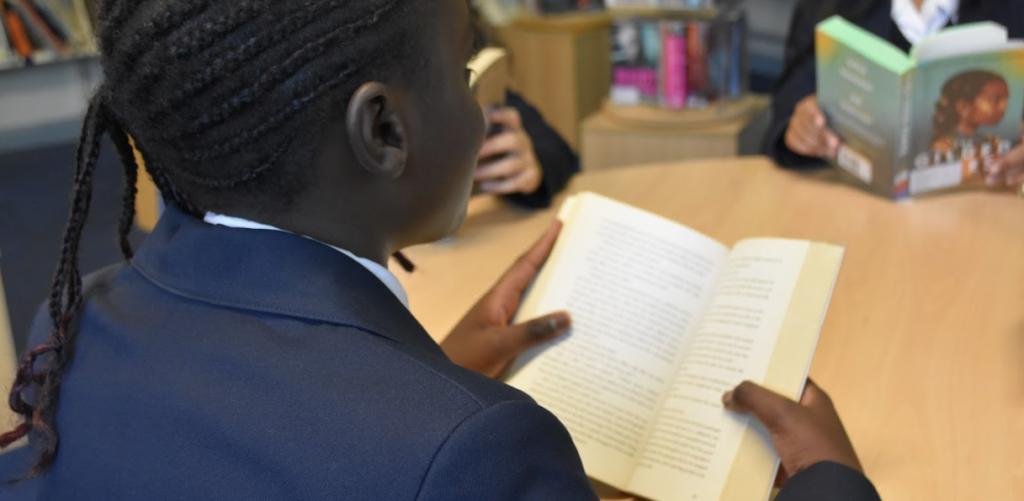
The school library is also open every day until 4.00pm, and KS4 students are welcome to attend, either simply to read for pleasure or to revise for their GCSE English Language and English Literature examinations.
GCSE course/s (exam board and code)
https://www.aqa.org.uk/subjects/english/gcse
AQA GCSE English Language (8700)
AQA GCSE English Literature (8702)